
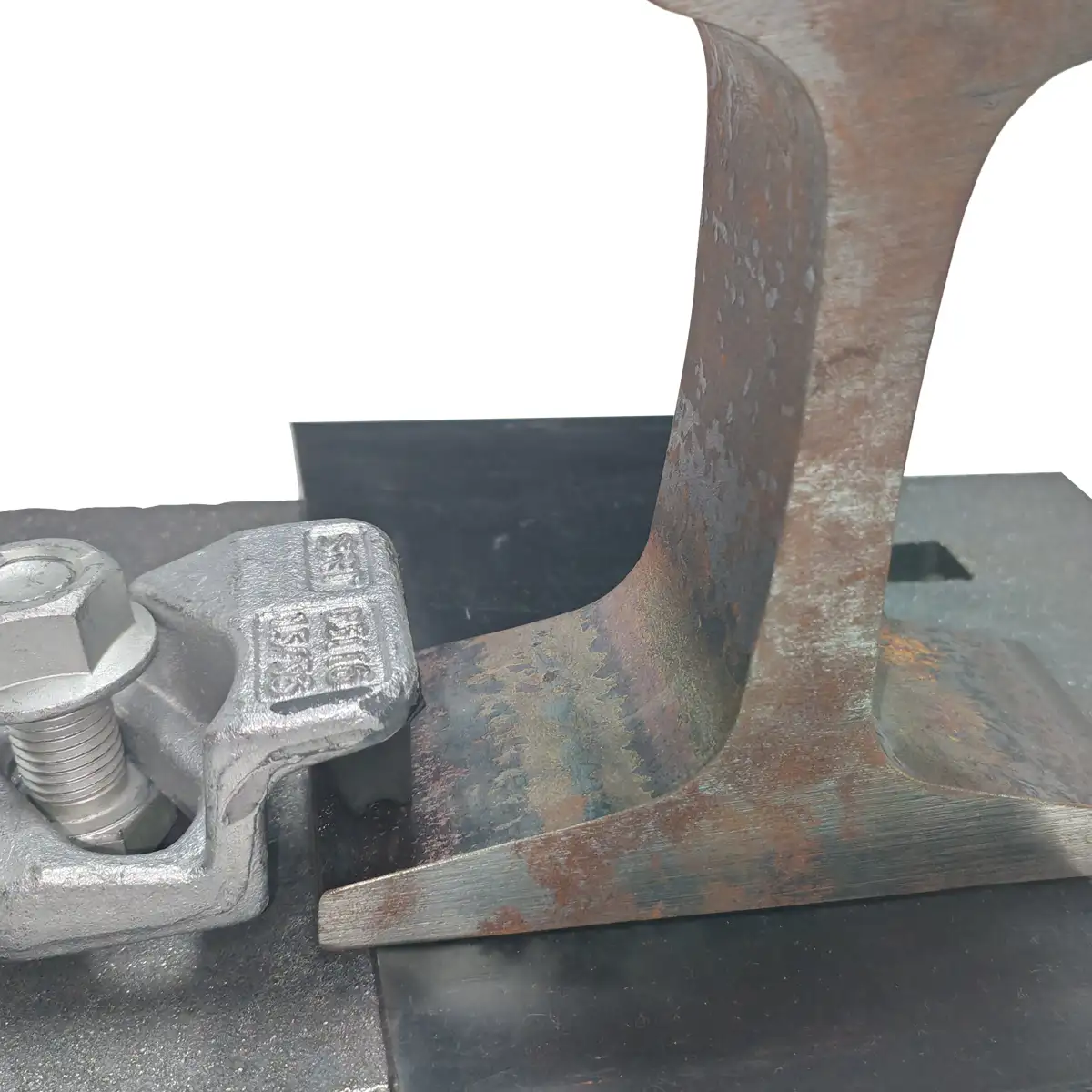
BOLTED CONNECTION
RAIL FIXING CLIPS
Bolted Installation
Prepared support
Maintenance Access
Removable assembly
Adjustment Options
Model dependent
System Matching
Rails, pads & soleplates
What Is a Bolted Crane Rail Clip?
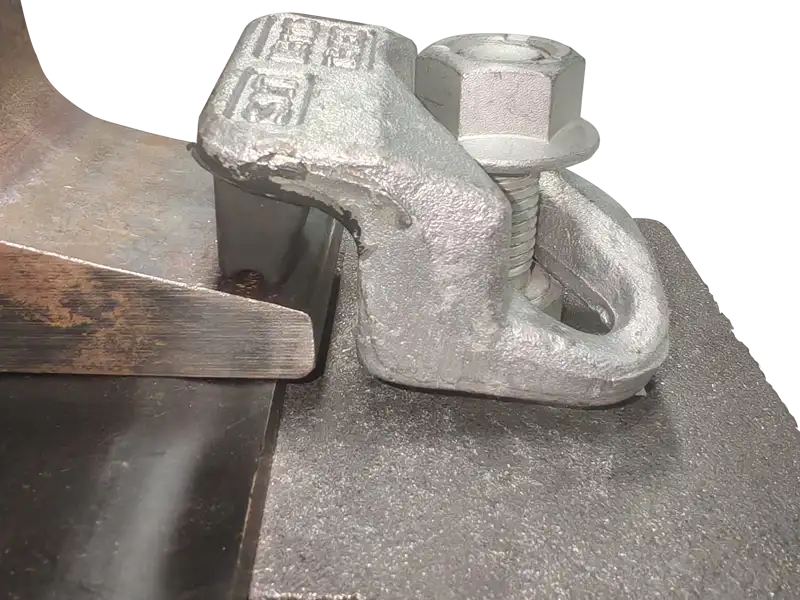
A bolted crane rail clip is an adjustable clamping plate that locks the rail foot to the shim by means of bolts passing through the rail support—with a lateral load capacity of 21–300 kN and a lateral adjustment range of 10–24 mm; it can be reopened without cutting the weld.
Our bolted rail fixing clips feature a removable design and offer various adjustment configurations, making them suitable for new crane track installations, replacement of existing rail clamps, and equipment maintenance projects.
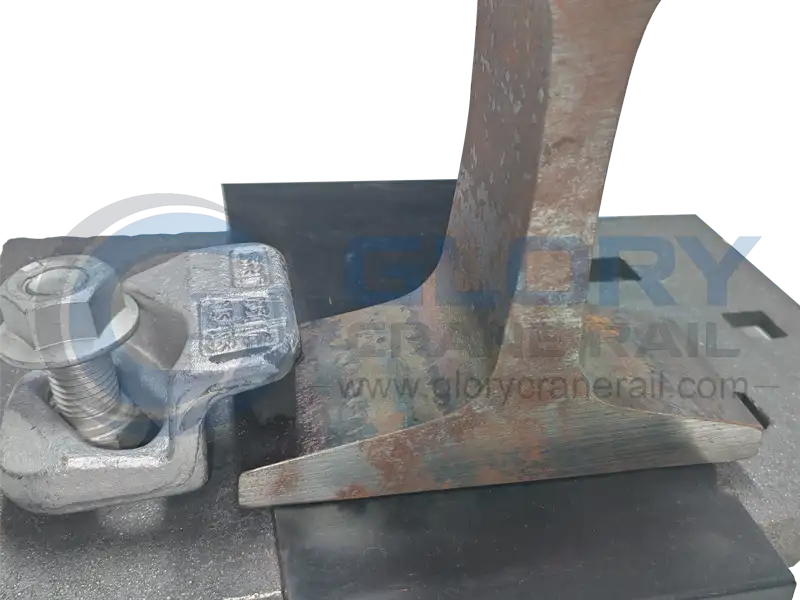
Glory Rail not only provides products, but also offers services such as rail cross-section verification,
rail clamp selection, technical drawing review, and crane track fastening system solutions.
Looking for bolted rail clips for a new project or replacement? Send us your rail profile or existing clip drawing for technical matching.
Find the Right Crane Rail Clip for Your Project
Glory Rail offers a variety of bolted crane rail clips designed to meet different crane rail fastening requirements.
Each through-bolt rail clamp is supported by a bolt that passes through the rail, and uses an adjustable wedge to clamp the bottom of the rail. The differences between the series lie in the body design, clamping nose, adjustment range, and installation width—Series 3 and 4, as well as Series 7, use soft-mounted rubber-nose fasteners; Series 25 features a fully sealed cam body; and Series 6 has no rubber nose—so please verify the track conditions and available space alongside the rails first.
| Model | Series | Lateral adjustment | Horizontal force · 8.8 | Horizontal force · 10.9 | Min. mounting width* |
|---|---|---|---|---|---|
| 3112/10Double-wedge | 3 & 4 series | 10 mm | 21 kN | 30 kN | 92 mm |
| 3124/20Rubber nose | 3 & 4 series | 20 mm | 125 kN | 140 kN | 170 mm |
| 3224/20Rubber nose | 3 & 4 series | 20 mm | 250 kN | 300 kN | 170 mm |
| 3226/15Rubber nose | 3 & 4 series | 15 mm | 250 kN | 300 kN | 150 mm |
| 6124/20Cam · no nose | 6 series | 20 mm | 125 kN | 140 kN | 149 mm |
| 7120/10Low profile | 7 series | 20 mm | 75 kN | 100 kN | 95 mm |
| 4116/10Rubber nose | 3 & 4 series | 10 mm | 38 kN | 50 kN | 100 mm |
| 4120/15Rubber nose | 3 & 4 series | 15 mm | 75 kN | 100 kN | 129 mm |
| 4124/15Rubber nose | 3 & 4 series | 15 mm | 125 kN | 140 kN | 140 mm |
| 2520/24Cam · sealed | 25 series | 24 mm | 75 kN | 100 kN | 184 mm |
| 2524/20Cam · sealed | 25 series | 20 mm | 125 kN | 140 kN | 180 mm |
| 2530/14Cam · sealed | 25 series | 14 mm | 200 kN | — | 180 mm |
Not Sure Which Model Matches Your Rail?
Submit drawings of the rail cross-section and support structure, along with the required quantity.
Glory Rail will assist in comparing the available options and identify any additional technical information needed to finalize the selection.
Four Inputs for a More Reliable Selection
1
Confirm the Rail
Profile
Please provide the rail standards, cross-sectional types, and rail base dimensions. If you are unable to confirm the rail type, you may submit drawings with dimensional annotations.
2
Define the Design Requirements
Provide the crane’s existing wheel load, design horizontal load, duty class, and project technical specifications. Do not select a model based directly on unverified general load estimates.
3
Check the Supporting
Structure
Check the width of the support surface, the locations of pre-drilled holes, the installation clearance, adjustment requirements, and the layout of rubber pads or steel shims.
4
Confirm the Operating Environment
Describe the corrosive environment, maintenance space, on-site installation conditions, and the project’s specific requirements for technical documentation.
Looking for An Alternative to Existing Gantrex Bolted Rail Clips?
Glory Rail offers a variety of bolted crane rail clips, which can be evaluated for compatibility as
replacements for certain existing crane rail fastening systems.
Our 3116, 3120, 3124, 3220, and 3224 models are suitable for selection in replacement, repair, and rail refurbishment projects.
Engineering Details of Rubber Nosed Clips
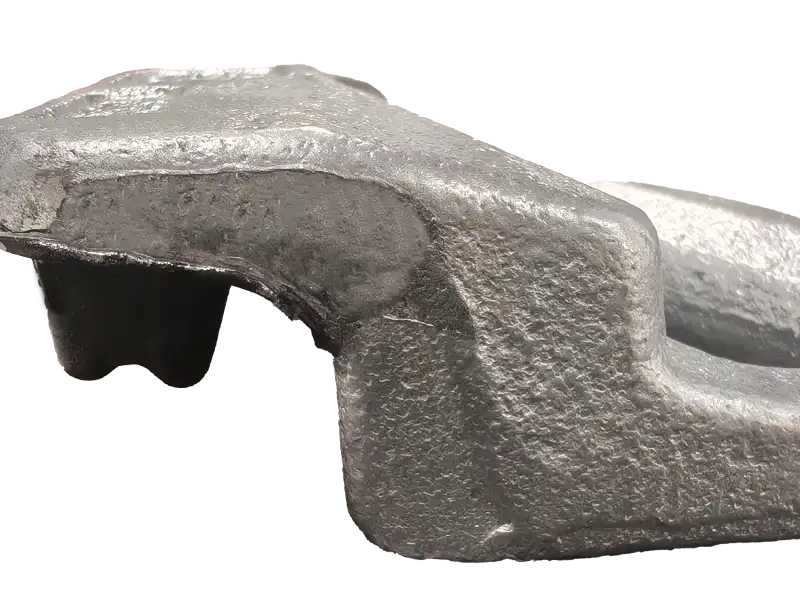
Rubber-nosed rail clips are equipped with elastic contact elements at the point of contact with the rail base. For specified models of rubber-nosed rail clips, the geometry and height of the contact elements should be verified in conjunction with the rail cross-section and the arrangement of the track rubber pads.
- Vulcanized Rubber Block: A vulcanized rubber blocks can be combined with the corresponding rail clamp components to form the elastic contact interface required by the design. Their function should be evaluated in conjunction with the entire assembly.
- Self-locking Mechanism: Glory Rail can help determine whether the selected components include a self-locking mechanism and identify the corresponding installation requirements.
Bolted Rail Clip Installation and System Coordination
Proper installation of bolted rail clips should begin with a verification of the support structure. Before tightening the assembly, check the hole positions, support width, rail alignment, and the orientation of the components.
For through-bolted rail clips, a thorough inspection of the entire bolted connection should be conducted, including the pre-drilled holes, bolt assemblies, installation clearance, and specific model requirements.
1
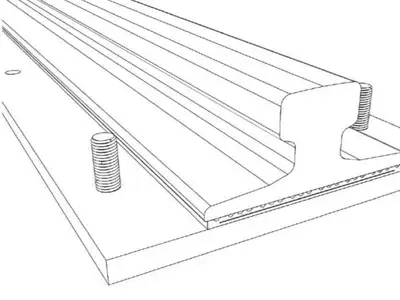
Check and Position the Rail
Check the support structure and mounting hole locations, position the rails, and verify their alignment.
2
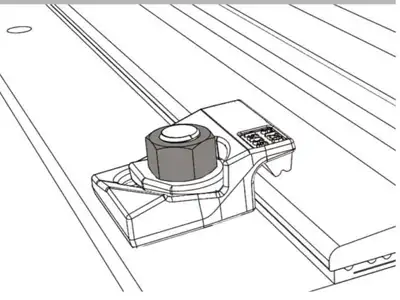
Install the rail clamp assemblies
Position each component in the specified direction
3
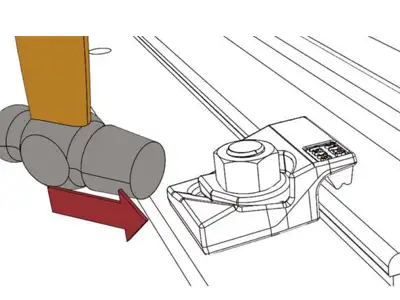
Adjust the Rail
Adjust the rail position using the adjustment function of the selected rail clamp.
4
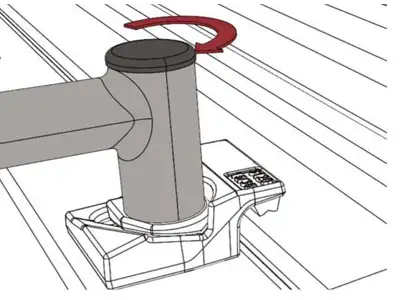
Tighten and inspect
Apply the specified torque, and check the contact between the rail base and the ground, as well as the condition of the assemblies.
Bolt grades, installation torque, and dimensional tolerances shall be specified in the applicable project specifications and product technical documentation; the same values shall not be applied to all models.
Where a Crane Runway Rail Clip Earns its Keep
In any situation where the track may need to be moved—such as expansion joints, crane realignment, phased construction, or situations where rails must be replaced without open-flame work—bolt-type crane rail clamps ensure that the entire running track remains removable.

Ports & container terminals
For shore cranes and tire-mounted gantry cranes exposed to salt spray, the steel rail fastening systems of the port cranes are realigned as the yard layout is adjusted.
A120
QU100
6 Series

Steel mills & rolling mills
Due to high temperatures, abrasion, and high impact loads on the running tracks, it is difficult to replace welded fasteners during brief shutdowns.
A120
QU100
6 Series

Shipyards & offshore
Gantry and hammerhead cranes at the dockhead—gantry crane rail clamps equipped with stainless steel fasteners and thick shims to facilitate cathodic protection.
A100
HDG
6 Series

Power & process plants
In the turbine building and maintenance crane area, the steel plates on the floor must not be welded, and the tracks will likely need to be removed in the future.
QU80
QU100
A75

Mining & bulk handling
The maintenance tracks for stacker-reclaimers and belt conveyors are affected by rail slippage, dust, and washing.
A120
QU100
HDG

Heavy fabrication shops
For overhead cranes installed in leased or modular factory buildings, the travel rails must be removable.
QU70
QU80
A65
Clip selector
Runs on Gantrail's published 12-model rating data — no interpolated values.
Load here means design lateral force per clip, not crane wheel load. Don't know it? Send the wheel load, wheelbase and travel speed — we calculate it and return a clip schedule.
Recommended clip
4124/15
3 & 4 seriesMeets 100 kN at Grade 8.8 · any published adjustment
- Series
- 3 & 4 series
- Adjustment
- 15 mm
- Min. mounting width
- 140 mm
- Ratings · 8.8 / 10.9
- 125 / 140 kN
System Compatibility
Rail, Rail fastening clip, pad and plate — one source
Fasteners are only half the story. The reliability of each rail fixing clamp depends on the rail type, bedding, and base plate it is installed on. Only when all components come from the same supplier can the geometric dimensions, hole patterns, and delivery dates be properly aligned.
Rails we supply for bolted fixing
Stock & mill order| Standard | Profiles | Series to review |
|---|---|---|
| DIN 536 | A55 · A65 · A75 · A100 · A120 · A150 | 3 & 4 · 25 |
| Chinese QU | QU70 · QU80 · QU100 · QU120 | 3 & 4 · 25 |
| ASCE | ASCE 60 · 75 · 85 | 3 & 4 |
| Square bar | 50 × 50 · 60 × 60 · 80 × 80 | 3 & 4 |
Series guidance only — the model is fixed by rail foot width, lateral load and the mounting width available.

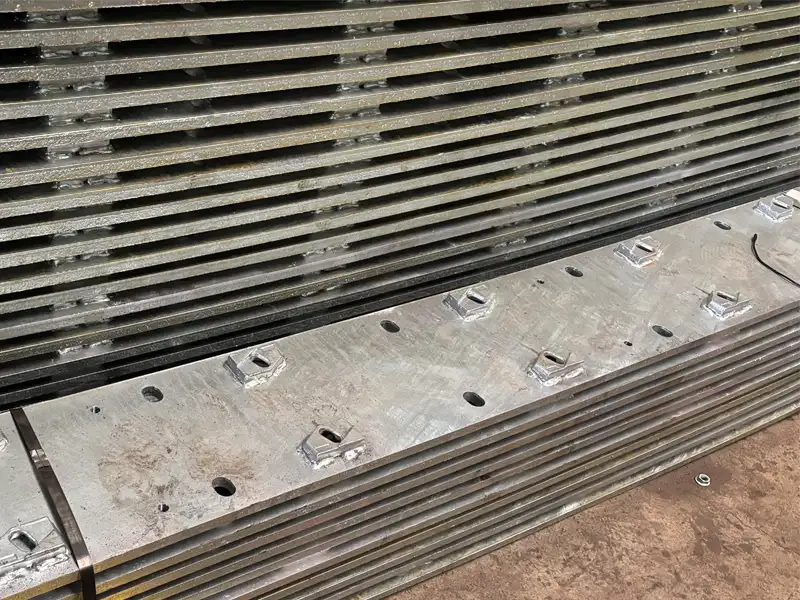
Drill holes according to the fastener hole pattern; apply a hot-dip galvanized primer

Clip bolt sets
Grade 8.8 or 10.9 bolts and nuts, nuts and washers
—match according to the fastener selection chart

Anchor bolts
Specifications are determined in conjunction with the fastener selection chart; an installation alignment template is included.
Frequently Asked Questions
Bolt-type crane rail clamps are attached to the precast support structure using bolts, while welded rail clamps are attached using a welded base. The specific choice depends on the project design, installation conditions, and maintenance requirements.
In rubber-nosed rail clips, the rubber contact components form part of the contact interface with the rail foot, and their geometry should be compatible with the rail cross-section and the arrangement of the track pads.
Yes. Glory Rail can evaluate replacement products for certain existing installation projects based on original product drawings, physical samples, dimensions, and fastening requirements.
Not all bolt-type rail clamps are adjustable. Refer to the corresponding product drawings for specific adjustment capabilities and ranges.
First, consider the space available alongside the rail base and the operating conditions. When space is limited, choose the 7 Series with the narrowest installation width—the 7120/10 model is 95 mm wide. The 3 and 4 Series are standard double-wedge series, rated at Grade 8.8 with capacities of 21–250 kN and an adjustment range of 10–20 mm. The 25 Series is a sealed, cam-adjustable series suitable for medium- to heavy-duty applications, offering the highest anti-lift load capacity (up to 90 kN). The 6 Series has no rubber nose and is typically hard-mounted; it is the published recommendation for shipyards and ship lifts.
Yes. Glory Rail provides replacement rail clamps, technical documentation, and related rail fastening accessories to crane maintenance companies and track renovation contractors.
Grade 8.8 is the published recommendation for standard operating conditions and is also the most economical option; some job sites permit only Grade 8.8. Upgrade to Grade 10.9 when larger couplers cannot be used but higher horizontal load-bearing capacity is required—for example, increasing the load capacity of 4124/15 from 125 kN to 140 kN. Before upgrading, verify the base plate grade and bolt spacing; never switch to a higher grade without first checking the base plate.
Please provide the rail model, any known preferred models, the required quantity, the application scenario, drawings of the support structure, and the delivery destination. If you need a specification sheet for adjustable rail clamps, please specify the rail adjustment requirements.
CLIENTS we've worked with


Get In Touch
After submitting the form, your dedicated account manager will contact you immediately to provide full-process technical support from selection to installation.
Your Expert in Crane Rail Solutions
To help us provide a faster and more accurate tailored solution, please consider including:
1. Rail Specifications: Rail section type, profile, or standard, and your required unit length.
2. Order Quantity: Total quantity of rails, matching fasteners, or related equipment needed.
3. Material & Grade: Specific steel material requirements or performance grades.
4. Technical Files: Any custom technical requirements, drawings (CAD/PDF), or project specifications.
Don't have all the details? No worries! Just leave us a message with what you know, and our experts will guide you through the process.