
Continusous Rail Pad
Glory Rail’s continuous track pads are installed along the entire length of the track,
providing a uniform, resilient foundation for rails secured to concrete or steel girders.
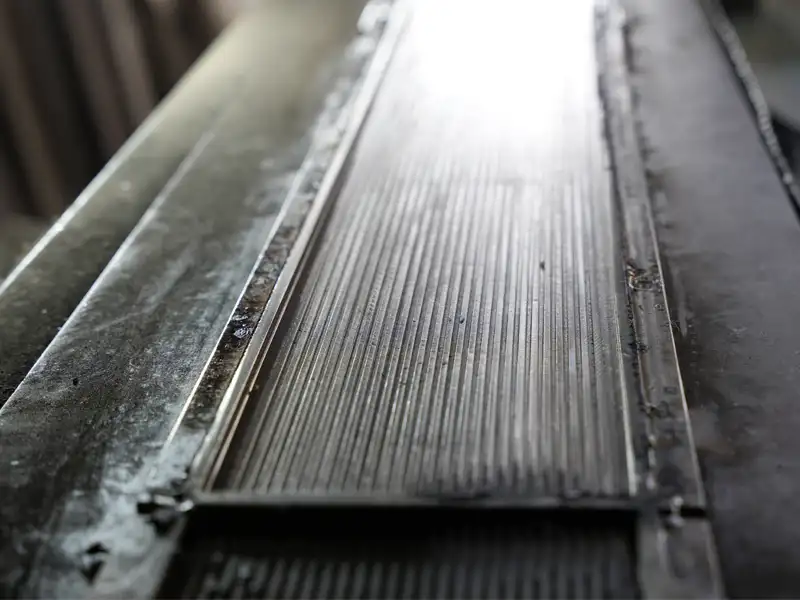
✔ The ideal choice for continuous support on concrete runways;
✔ Steel-reinforced resilient pads with embedded steel strips;
✔ Grooved surface resists creep and absorbs wheel impact;
✔ Meets crane pad requirements for maximum wheel loads
Individual Rail Pad
Discontinuous rail pads are specifically molded for installation on independent base plates,
allowing for controlled micro-displacement while maintaining alignment.
✔ Perfectly fits independent steel sole plates;
✔ Convex surface and rectangular ribs ensure stable load transfer;
✔ Helps eliminate fretting corrosion between the rail and the sole plate;
✔ Easy to install and replace during maintenance windows;

Vibration & shock absorption

Load distribution

Corrosion protection

Extended track lifespan
Crane Rail Pads — Resilient Rubber Pads for Crane Rail Systems
Crane rail pads are elastomeric components installed between the crane rails and the steel sole plate or concrete foundation. They absorb shock, evenly distribute wheel load, and eliminate fretting corrosion between the rail and sole plate during heavy-duty lifting operations. Glory Rail offers factory-direct elastomeric rail pads in both continuous and intermittent configurations. The standard thickness is 7 mm, and the operating temperature range is -25°C to 100°C.

Crane rail pads are elastomeric components installed between the crane rails and the steel sole plate or concrete foundation. They absorb shock, evenly distribute wheel load, and eliminate fretting corrosion between the rail and sole plate during heavy-duty lifting operations. Glory Rail offers factory-direct elastomeric rail pads in both continuous and intermittent configurations. The standard thickness is 7 mm, and the operating temperature range is -25°C to 100°C.
Continuous vs Discontinuous Crane Rail Pads
Glory Rail offers two types of crane rail pads, each designed for different installation methods and load conditions. Please use the comparison table below to select the type that best suits your application.

Continuous rail pads
Steel-reinforced continuous crane rail pads are suitable for installation scenarios requiring continuous structural rail support. The embedded steel plates provide high lateral stiffness, preventing longitudinal rail movement under extreme loads. The corrugated groove surface produces nonlinear load-deflection characteristics, controlling bending stress in the rails under heavy wheel loads.

Discontinuous Rail Pads
Discontinuous rail pads are suitable for track systems installed on independent sole plates. Their convex surface and rectangular ribs ensure closer contact between the rail and the sole plate while providing additional elasticity. They significantly reduce stress and eliminate fretting corrosion between the rail and the sole plate at each installation point.
| Feature | Continuous Rail Pad | Discontinuous Rail Pad |
|---|---|---|
| Support Type | continuous support (full-length soleplate) | discontinuous support (individual soleplates) |
| Material | Steel-reinforced resilient pad with embedded steel plate | Nitrile rubber elastomer pad |
| Surface Design | Groove surface (fluted/corrugated) | Convex surface / Rectangular ribs |
| Key Function | Nonlinear load-deflection characteristics; controlling rail bending stress; | Allows for slight angular rotation of the rails; absorbs point loads; |
| Best For | Heavy-duty continuous crane girders; | Independent base plate mounting system; |
| Standard Thickness | 7mm thick elastomeric crane rail pads | 7mm thick elastomeric crane rail pads |
| Temp. Range | High temperature crane rail pads (-25°C to 100°C) | High temperature crane rail pads (-25°C to 100°C) |
Not Sure Which Type You Need?
Send us your rail drawing or application details — our engineers will recommend the right pad type.
How to Install Crane Rail Pads

Material Selection & Performance Properties
The performance of crane rail rubber pads is fundamentally determined by the rubber compound. Glory Rail offers pads made from five main types of elastomers, each designed for specific operating conditions. We refuse to use recycled rubber—only high-quality virgin materials enter our production line.
| Material | Key Properties | Best For | Oil Resistance | Temp. Range |
|---|---|---|---|---|
| Nitrile rubber (NBR) | Excellent oil, fuel and abrasion resistance; high tensile strength (≥ 17.5 N/mm²) | Steel plants, foundries, oily environments | Excellent | -25°C ~ 100°C |
| Natural rubber (NR) | High resilience, superior elasticity, good abrasion resistance | General crane applications | Poor | -40°C ~ 80°C |
| SBR | Good abrasion resistance, cost-effective, moderate aging resistance | Standard duty crane rails | Poor | -30°C ~ 80°C |
| EPDM | Excellent weather, ozone and UV resistance; good heat aging | Outdoor port cranes, tropical climates | Poor | -40°C ~ 120°C |
| CR (Chloroprene) | Balanced oil, ozone and flame resistance; moderate cost | Chemical plants, moderate oil exposure | Good | -30°C ~ 100°C |
| PU (Polyurethane) | Superior abrasion resistance, high load capacity, long service life | Ultra-heavy-duty, high-cycle cranes | Good | -30°C ~ 80°C |
For most heavy-duty crane applications, Glory Rail recommends nitrile rubber as the default material, as its performance under high loads, exposure to oil, and repeated dynamic loads has been proven—tests show that the compressive strength of our pads is approximately five times the strength required to withstand the maximum crane wheel load.
Our custom crane rail pad (size/thickness/hardness) service allows you to select the optimal material combination based on specific crane pad sizes and requirements, including a Shore hardness range of 75±5 IRHD.
Need a Specific Material for Your Environment?
From oil-resistant NBR to UV-resistant EPDM — we customize the compound to your operating conditions.
Steel-Reinforced Crane Rail Pad — Technical Specifications
The following data applies to the steel-reinforced resilient pads manufactured by Glory Rail, which are made from a nitrile rubber compound. All values were tested in accordance with ISO international standards.
| Property | Test Standard | Value (Before Aging) | Value (After Aging) |
|---|---|---|---|
| Material | — | Nitrile rubber (NBR) with steel reinforcement | — |
| Shore Hardness | ISO 48:1994 | 75 ± 5 IRHD | 75 ± 5 IRHD |
| Tensile Strength | ISO 37:1994 | ≥ 17.5 N/mm² | ≥ 15.0 N/mm² |
| Elongation at Break | ISO 37:1994 | ≥ 305% | ≥ 240% |
| Compression Set | ISO 815:1991 | ≤ 5% (max @ 23°C) | — |
| Rebound Resilience | ISO 4662:1986 | ≥ 27% | — |
| Standard Thickness | — | 7mm thick elastomeric crane rail pads | — |
| Operating Temperature | — | High temperature crane rail pads (-25°C to 100°C) | — |
| Compression Strength Factor | Internal Test | ~5× safety margin vs. max wheel load | — |
| Surface Pattern | — | Groove surface / Convex surface / Rectangular ribs | — |
Where Crane Rail Pads Are Used
As a professional manufacturer and supplier of crane rail pads, Glory Rail has supplied rubber pads for crane rail systems to more than 30 countries. Our pads are used in all major crane types and industrial sectors.
| Material | Key Properties | Best For | Oil Resistance | Temp. Range |
|---|---|---|---|---|
| Nitrile rubber (NBR) | Excellent oil, fuel and abrasion resistance; high tensile strength (≥ 17.5 N/mm²) | Steel plants, foundries, oily environments | Excellent | -25°C ~ 100°C |
| Natural rubber (NR) | High resilience, superior elasticity, good abrasion resistance | General crane applications | Poor | -40°C ~ 80°C |
| SBR | Good abrasion resistance, cost-effective, moderate aging resistance | Standard duty crane rails | Poor | -30°C ~ 80°C |
| EPDM | Excellent weather, ozone and UV resistance; good heat aging | Outdoor port cranes, tropical climates | Poor | -40°C ~ 120°C |
| CR (Chloroprene) | Balanced oil, ozone and flame resistance; moderate cost | Chemical plants, moderate oil exposure | Good | -30°C ~ 100°C |
| PU (Polyurethane) | Superior abrasion resistance, high load capacity, long service life | Ultra-heavy-duty, high-cycle cranes | Good | -30°C ~ 80°C |
Rail Rubber Pads Options for Diverse Applications


Service Industries: Ports and Terminals · Steel and Metallurgical Plants · Power Plants (Cranes in Turbine Rooms) · Shipyards and Shipbuilding · Mining and Material Handling · Automotive Manufacturing · Precast Concrete Plants
Looking for Pads for Your Crane Type?
From oil-resistant NBR to UV-resistant EPDM — we customize the compound to your operating conditions.
Crane Rail Pad Size Chart — Compatible Rail Sections
Glory Rail crane rail pads are slightly narrower than the rail flange width to ensure that adjustable rail fasteners fit snugly against the rail flange. The standard thickness is 7 mm for elastomeric crane rail pads. Custom crane pad sizes and specifications are available upon request.
| Material | Key Properties | Best For | Oil Resistance | Temp. Range |
|---|---|---|---|---|
| Nitrile rubber (NBR) | Excellent oil, fuel and abrasion resistance; high tensile strength (≥ 17.5 N/mm²) | Steel plants, foundries, oily environments | Excellent | -25°C ~ 100°C |
| Natural rubber (NR) | High resilience, superior elasticity, good abrasion resistance | General crane applications | Poor | -40°C ~ 80°C |
| SBR | Good abrasion resistance, cost-effective, moderate aging resistance | Standard duty crane rails | Poor | -30°C ~ 80°C |
| EPDM | Excellent weather, ozone and UV resistance; good heat aging | Outdoor port cranes, tropical climates | Poor | -40°C ~ 120°C |
| CR (Chloroprene) | Balanced oil, ozone and flame resistance; moderate cost | Chemical plants, moderate oil exposure | Good | -30°C ~ 100°C |
| PU (Polyurethane) | Superior abrasion resistance, high load capacity, long service life | Ultra-heavy-duty, high-cycle cranes | Good | -30°C ~ 80°C |
Can’t find the rail profile you need? We offer custom crane rail pads (size/thickness/hardness)—send us your rail drawings, and we’ll manufacture them to your exact specifications.
Need a Custom Pad Size?
Send your rail drawing — we manufacture to your exact dimensions within 7 days.
Why Choose Glory Rail as Your Crane Rail Pad Manufacturer?
Brand Strength and Global Experience
Glory Rail is an OEM/ODM crane rail pad manufacturer based in Zhengzhou, China. With over 20 years of global export experience, we have supplied crane rail pads to more than 30 countries across Southeast Asia, the Middle East, Africa, Europe, and the Americas. Our team provides one-on-one product selection consultation and vibration damping solution design for every project.


Production Capabilities
As a crane rail pad manufacturer and supplier in China, Glory Rail operates dedicated rubber compounding and vulcanization production lines. We offer factory-direct elastomeric rail pads in both continuous support and discontinuous support configurations. Our capabilities include:
Comprehensive formulation design and compounding of natural rubber (NR), SBR, EPDM, CR, and PU (natural rubber, styrene-butadiene rubber, ethylene-propylene-diene monomer, chloroprene rubber, and polyurethane);
Steel plate embedding and vulcanization processes for the production of steel-reinforced resilient pads;
Custom crane pad sizes based on rail drawings, delivered within 7 business days;
Small-batch orders and sample testing supported;
Standard specifications are in stock and available for immediate shipment.


“Glory Rail is committed to using high-quality raw materials and refuses to use recycled materials—thereby enhancing the performance and service life of the rail pads and reducing downtime losses caused by maintenance and replacement.”
Frequently Asked Questions About Crane Rail Pads
A: For heavy-duty crane applications, standard crane pad requirements include: Shore hardness of 75±5 IRHD, tensile strength of ≥17.5 N/mm², compression set of ≤5%, and an operating temperature range of -25°C to 100°C. For wheel loads exceeding 30 metric tons, 7 mm thick elastomeric crane rail pads are recommended, featuring a nitrile rubber formulation and a steel-reinforced resilient pad structure.
A: Under normal operating conditions (without chemical corrosion or excessive impact), our crane rail rubber pads typically have a service life of more than 5 years. We recommend conducting annual routine inspections of the rail system. If the pads show signs of aging, cracking, or severe compression, they should be replaced promptly. Our pads are tested with a safety margin of approximately five times the maximum wheel load.
A: Continuous support uses full-length steel-reinforced continuous crane rail pads laid on a continuous base plate—suitable for heavy-duty crane beams. Discontinuous support uses individual discontinuous rail pads installed on separate base plates—suitable for independent mounting points. The choice depends on your beam structure and support method.
A: Standard specifications are in stock, and we accept small-volume orders. Custom crane rail pads (size/thickness/hardness) are subject to quantity and manufacturing requirements. We offer sample testing—shipping costs and fees are negotiable. As an experienced manufacturer and supplier of crane rail pads, we can meet both sample and mass production needs.
CLIENTS we’ve worked with


Get In Touch
After submitting the form, your dedicated account manager will contact you immediately to provide full-process technical support from selection to installation.
Your Expert in Crane Rail Solutions
To help us provide a faster and more accurate tailored solution, please consider including:
1. Rail Specifications: Rail section type, profile, or standard, and your required unit length.
2. Order Quantity: Total quantity of rails, matching fasteners, or related equipment needed.
3. Material & Grade: Specific steel material requirements or performance grades.
4. Technical Files: Any custom technical requirements, drawings (CAD/PDF), or project specifications.
Don’t have all the details? No worries! Just leave us a message with what you know, and our experts will guide you through the process.