
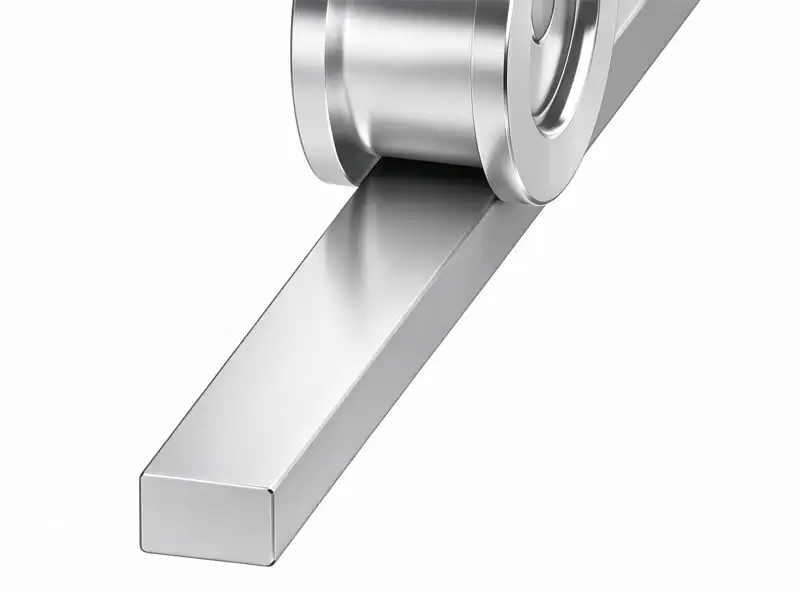
In certain light-duty crane systems, equipment guidance applications, and temporary material handling scenarios, square and flat steel bar rail can serve as alternatives to crane rails. However, their suitability depends on wheel load, wheel-to-rail contact conditions, the support structure, and the frequency of equipment operation. Unlike standard QU crane rails and DIN 536 crane rails, the cross-sections of square and flat steel do not necessarily meet the rail profile and contact geometry requirements of all crane systems. This article will discuss the potential applications and limitations of these steel cross-sections, as well as when it is more appropriate to select standard crane rail profiles.
Although both have relatively simple cross-sectional structures, they serve different functions. Flat bar crane rails are typically used in light-duty crane systems as load-bearing tracks for wheeled travel; square bar crane rails, on the other hand, can be used as guide rails for crane wheels. The specific choice depends on the equipment design and the requirements of the entire rail system.
These two types of rails should not automatically be considered substitutes for QU crane rails or DIN 536 crane rails. Before selecting a type, engineers need to evaluate factors such as wheel load, contact conditions, support structures, fastening methods, and operating frequency.
What Are Flat and Square Steel Bars Used as Rails?
Flat bar rails have a rectangular cross-section and can be used in properly designed light-duty crane and trolley systems. Their suitability depends on the wheel profile, contact surface, support spacing, mounting method, and actual load.
Square bar rails have a square cross-section and can be used in track designs that require square cross-sections for running or guiding components. Their actual guiding capacity depends on the wheel geometry and the overall track structure, and cannot be determined solely by the square cross-section.
These products should be evaluated as part of a complete track system, rather than viewed merely as standalone steel sections. For specific dimensions, available materials, and fabrication capabilities, please refer to the Crane Flat Bar Rails and Square Bar Rails product page.
Which Crane Systems Can Use Flat Bar or Square Bar Rails?
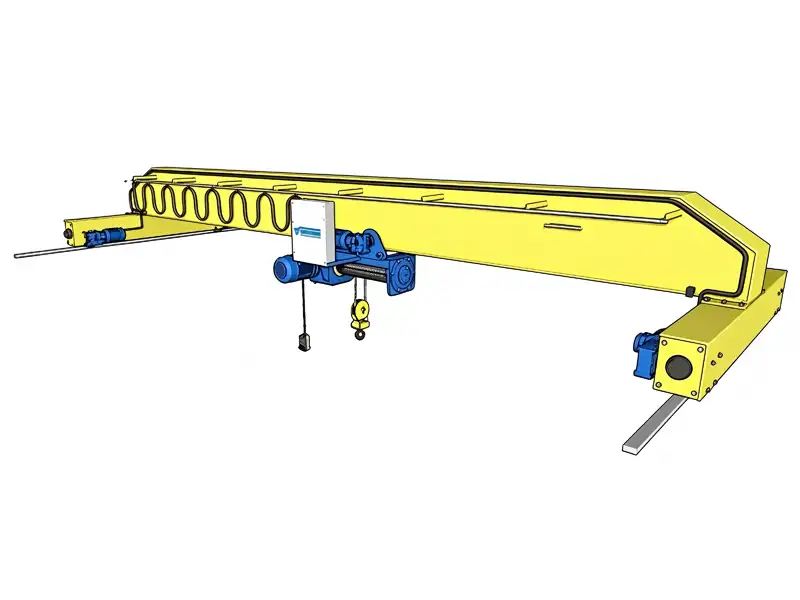
Light-Duty Crane and Trolley Systems
When the wheel load and operating conditions are compatible with the rail cross-section, flat rails can be used in certain bridge cranes, overhead cranes, electric hoists, and industrial trolley systems. Their relatively simple geometry also facilitates installation on properly designed steel structures.
Before selecting a rail type, engineers should verify the maximum wheel load, wheel contact width, rail support method, and fastening details. Even though the rail cross-section is relatively simple, it must still meet the structural and operational requirements of the entire system.
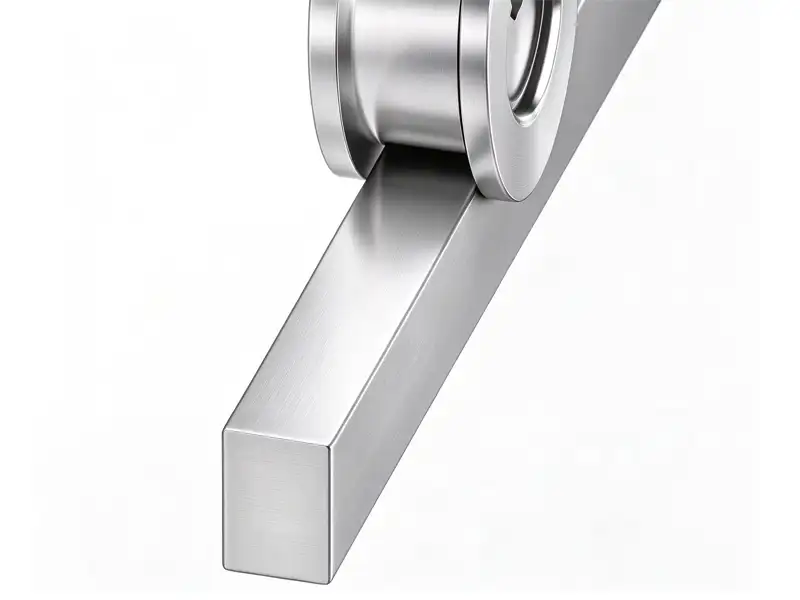
Industrial Equipment Guide Rails
In transfer trolleys, automated guided vehicles (AGVs), and certain material-handling equipment, flat or square steel bars can be used as industrial equipment guide rails or running contact surfaces. The specific cross-section depends on whether the rail is primarily designed to bear vertical loads, restrict lateral displacement, or perform both functions simultaneously.
For systems using flat wheels or V-groove wheels, it is essential to ensure that the wheel profile matches the track geometry. The engineering design should also take into account installation alignment accuracy, lateral restraint, contact surface wear, and the possibility of debris accumulation on the track.
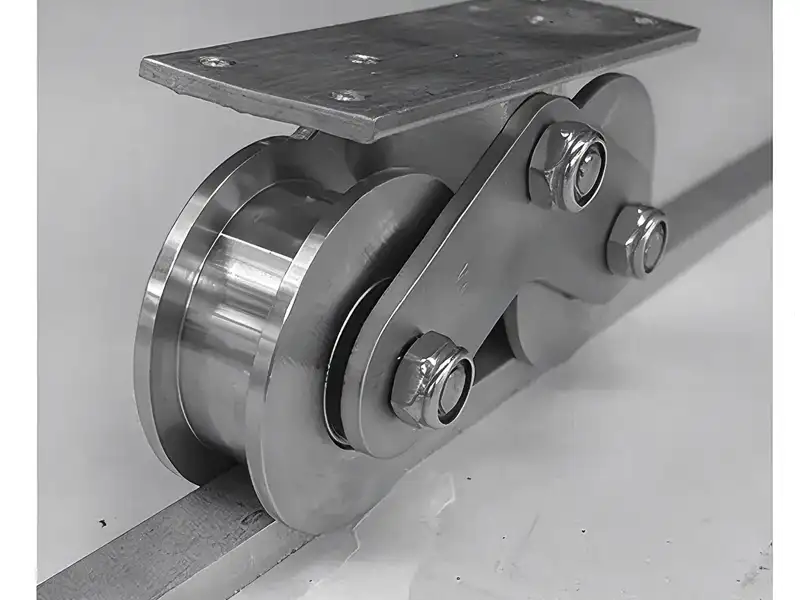
Temporary Material Handling Tracks
For certain transport carts and temporary handling systems at construction sites, flat bar or square bar can serve as a practical track solution when the load, operating speed, service life, and installation conditions are clearly defined and subject to specific constraints.
For systems using flat wheels or V-groove wheels, it is essential to ensure that the wheel profile matches the track geometry. The engineering design should also take into account installation alignment accuracy, lateral restraint, contact surface wear, and the possibility of debris accumulation on the track.
Flat Bar and Square Bar Rails vs. QU and DIN Crane Rails
Compared to many standard crane rails, flat and square rails have a simpler cross-sectional structure. However, the cross-sectional shape alone does not determine load-carrying capacity or service life. The selected rails must be compatible with the wheel design, support conditions, and operational requirements.
QU crane rails and DIN 536 crane rails have cross-sectional geometries specified for their respective series and sizes. These standard profiles are typically considered for crane systems that require the specification of rail profiles and corresponding mounting structures.
The selection of rail type should be based on engineering calculations and project requirements, rather than on the assumption that any one type of rail is superior to others in all circumstances.
| Selection Criteria | Flat bar or square bar rail | QU or DIN Crane Rails |
|---|---|---|
| Cross-Section | Rectangular or square | With specified profile geometry |
| Primary Function | Flat bars are used for travel, while square bars are used for guidance in applicable designs | Depends on the selected profile and crane system |
| Wheel Matching | The wheel profile and contact conditions must be verified | Wheel load and contact requirements must also be verified |
| Structural Verification | Cross-sectional strength, deflection, support spacing, and mounting method; | Profile selection, wheel load, support conditions, and mounting method |
| Common Selection Scenarios | Specific crane systems where the wheels and support structures are matched | Projects with specific requirements for QU or DIN profiles |
For projects requiring standardized crane rail profiles, please refer to the crane rail product series. The product series covers types such as QU, DIN, and ASCE, making it easy for engineers to compare options based on project specifications and operating conditions.
What Factors Matter When Selecting a Crane Track Rail?
When selecting a crane track, it is not enough to simply compare nominal dimensions or material grades; it is also necessary to ensure that the rails, wheels, support structures, and fastening methods can work together as a single system.
Maximum Wheel Load and Rail Stiffness
The maximum wheel load is a critical input parameter for rail selection. Engineers should consider the actual wheel load distribution, operating conditions, support spacing, and the effects of forces at rail joints. Additionally, they should calculate rail stiffness and deflection to confirm that the selected cross-section and its support structure can meet the performance requirements under the anticipated loads.
Wheel-to-Rail Contact and Compatibility
Wheel-to-rail contact affects load transfer, running stability, and wear. The wheel profile, contact width, rail edge geometry, and lateral guidance structure should be evaluated comprehensively. Even if the rail cross-sectional dimensions appear to be sufficient, the design may still be unsuitable if the contact interface between the wheel and the rail is not properly matched.
Rail Alignment, Fixing, and Support
Rail alignment and fastening are essential for ensuring stable operation. Engineers should determine the support method, bolting or welding techniques, joint treatment, and installation tolerances based on the system design. Poor alignment or inadequate support can lead to uneven contact, excessive deflection, and accelerated wear.
Material Properties and Wear Resistance
Material selection should take into account actual loads, contact stresses, operating frequency, and the operating environment. Rail wear resistance cannot be determined solely by the material grade; hardness, manufacturing condition, wheel compatibility, and maintenance practices may also affect service life.
For projects using standard crane rails, the selected profiles should be verified in accordance with relevant technical specifications and engineering calculations. For example, the QU100 rail product page can serve as a reference for engineers when evaluating this model.
When Is a Standard Crane Rail Profile the Better Choice?
When a project specifies requirements for rail profiles, wheel-rail contact geometry, or technical performance documentation, or when the track system must accommodate particularly demanding operating conditions, the use of specialized crane rails should be considered.
When selecting a rail type, comprehensive consideration should be given to the crane’s wheel load, duty class, operating speed, wheel design, support structure, fastening system, and project-specific requirements. Whether using flat steel, square steel, or standard crane rails, suitability should not be determined solely based on appearance or general load descriptions.
If a project has specified standard rail profiles, an engineering evaluation must be conducted before substituting them with other steel cross-sections to confirm that the alternative meets the relevant structural, operational, and installation requirements.
How Can You Match the Rail to Your Project Requirements?
The appropriate rail depends on the entire operating structure, not just the steel cross-section itself. Before finalizing the crane rail selection, it is recommended that you prepare the following technical information:
- Crane Types and Rail Functions—Load-bearing or Guide Rails
- Maximum Wheel Load and Wheel Profile
- Operating Frequency and Travel Speed
- Required Rail Dimensions and Installation Tolerances
- Support Structures, Fastening Methods, and Joint Details
- Material Requirements and Operating Environment
With this information, the engineering team can assess whether flat steel rails, square steel rails, or standard crane rail profiles are best suited for the current application.
To discuss specific rail solutions, please provide the Glory Rail team with details on the equipment type, wheel load information, rail dimensions, and installation drawings. This information will help establish a more reliable technical basis for profile selection and custom fabrication.
Contact Glory Rail to discuss your rail specifications and application requirements.